
Published 18 October 2026. General guidance; an inspection of your vehicle is still required.
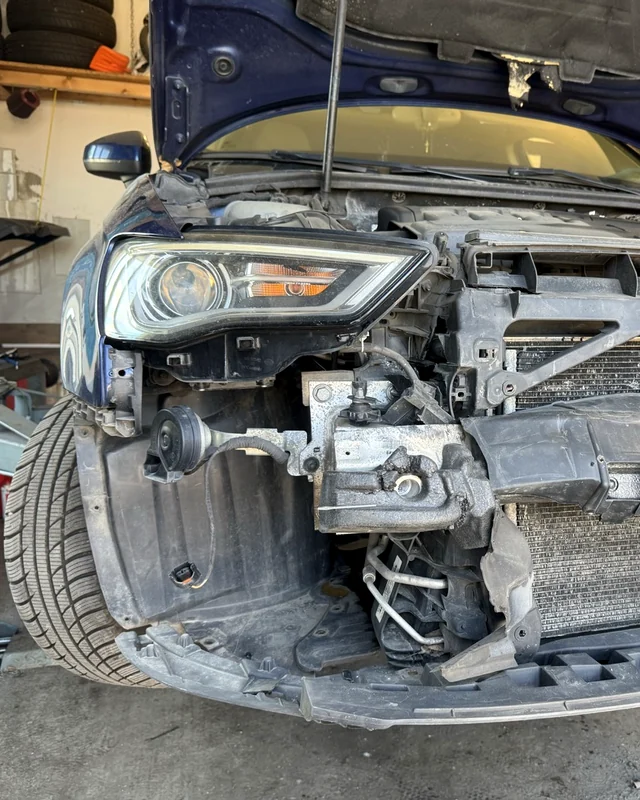
General guidance cannot confirm that your car is safe to drive. The existing workshop photograph is illustrative, not evidence of this fault.
Do not investigate poor wiping while driving
If the wipers cannot maintain the necessary view in rain, stop safely as the situation requires and do not continue with obscured glass. Do not wipe it by hand or record a workshop video while driving. If the wipers stop suddenly, do not conduct repeated tests in traffic. This guide cannot confirm a safe journey; discuss the next step while parked, or arrange help if visibility cannot be restored.
Describe streaks, missed areas and judder separately
Say whether wiping leaves a narrow line, a large unwiped patch or a greasy film, or whether the blade skips across the glass. Identify the left, right or rear wiper. Wear and incorrect fitting can affect results, but the description alone cannot identify a failed mechanism. A consistently missed area is useful information; there is no reason to run the blades on dry, dirty glass just to reproduce it.
Limit checks to safe, handbook-guided observations
Distinguish outside contamination from a problem on the inside surface. Use a product suitable for automotive glass and any fitted surface treatments; do not experiment with abrasive household mixtures. Follow the handbook's service-position procedure before inspecting blades, and never force an arm upwards. If the method is unclear or a blade is frozen to the screen, leave handling to an appropriate professional. Report any difference after ordinary cleaning under safe conditions.
Replacement blades must suit the actual vehicle
Length alone is not enough to select a part: the correct design and attachment also matter. If poor wiping began immediately after replacement, report the blade make or identification and when you first noticed the issue. Do not bend arms, dismantle the drive or assume an electrical fault is just a consumable part. Stop using wipers with abnormal movement or blades colliding and arrange checks instead of further experiments.
Recognise a different visibility problem
If the obscuring film is inside the glass, the wipers cannot remove it; the separate window-fogging guide is relevant. If washers do not spray, report that as another symptom rather than automatically blaming blades. Identify whether the front or rear system is affected and whether the problem followed frost or other work. There is no universal fuse-replacement procedure here, and no recommendation to increase a fuse rating when it fails repeatedly.
Provide details for a useful assessment and quote
Send the make, model and year, and identify the area that does not clear. Explain whether the blades are new, the change was sudden and washers work. A photograph taken from a safely parked car may help orientation, not confirm a particular replacement part. Ask what work is available for the vehicle and agree its scope. Blade prices are not drive-mechanism repair prices; no single total or guaranteed cure is promised without assessment.
Frequently asked questions
Should I buy another set if new blades still leave streaks?
Do not order a second set blindly. Report the exact parts, when the issue started and the wiping pattern so fitment and glass condition can be considered.
Should I bend the arm to increase pressure?
Do not adjust the arm without the appropriate prescribed procedure. More pressure is not automatically the solution and may cause further damage.
Agree the next step safely
Autoservis 1 is at Unhošťská 92, Červený Újezd, near Unhošť, Hostivice, Kladno and Prague-West. Describe the symptoms before travelling. An enquiry does not confirm a price, appointment or safe journey.
Send only relevant details
Email only relevant photographs or records taken while safely parked. Remove unrelated personal information. The form does not accept attachments. Never put yourself at risk to document a fault.
Request a checkTechnical references and pricing
General technical guidance, not a diagnosis of your vehicle. Follow the vehicle-specific instructions.