
Published 18 October 2026. General guidance; an inspection of your vehicle is still required.
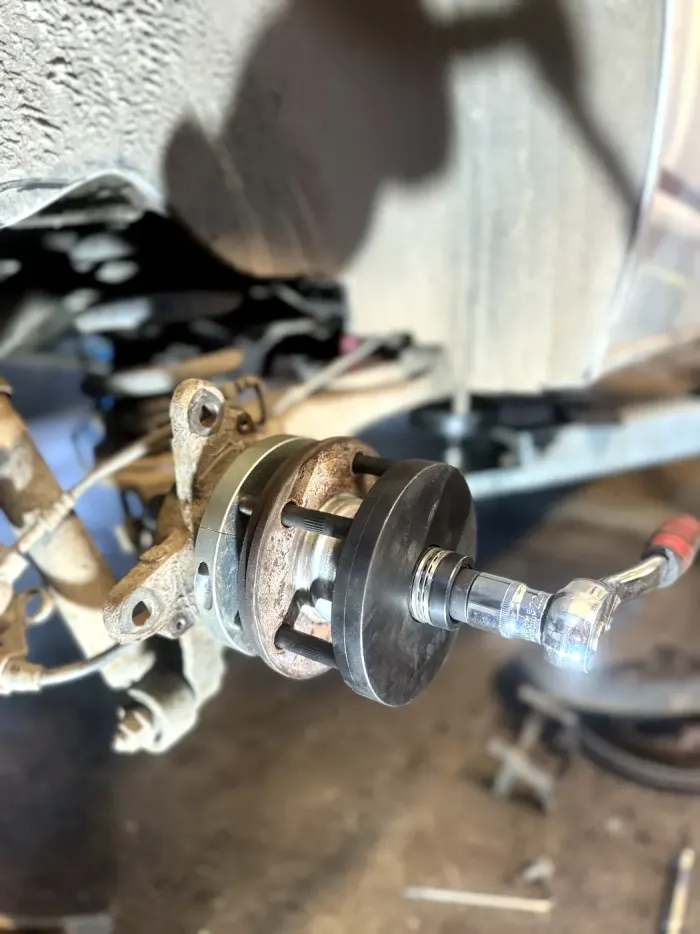
General guidance cannot confirm that your car is safe to drive. The existing workshop photograph is illustrative, not evidence of this fault.
Do not test an unstable vehicle on another journey
Suddenly uncertain steering, pronounced deviation, tyre damage or changed behaviour after an impact calls for a safe stop and appropriate assistance. Do not wait for a form response if control is affected. Do not seek a rough road or try sharp steering manoeuvres to describe the fault. A photograph or brief telephone conversation cannot establish that driving to the workshop is safe. Discuss suitable vehicle transport before attempting another journey.
Describe movement separately from noise
Useful observations include continued body movement after a single bump, an unsettled ride or more sway than previously. Excessive movement may involve damping, but that description does not identify a failed part by itself. Say whether you notice the front, rear or entire car moving and whether there is also noise. The existing suspension-knocking guide is about sounds; this guide focuses on changed movement and stability.
Mention loading and changes before the symptom appeared
Record a recent tyre change, carried load, pothole impact or suspension work. This is useful timing information, not proof that the last workshop caused the problem. If the symptom appeared only with a particular load, describe it without recreating the conditions. Identify the vehicle version accurately: sports, air or electronically controlled suspension may need a different approach, and the availability of appropriate checks must be confirmed first.
A driveway bounce is not a safety assessment
Do not declare the dampers healthy from one push on the body or order replacements on that basis. Do not dismantle springs or mountings, or crawl under an unsupported vehicle. While safely parked, you can report an already visible height difference or observed tyre wear, not attempt to measure behaviour while driving. Treat these as observations; choosing and interpreting suitable tests belongs to an assessment of the actual vehicle.
Ask what the suspension check can establish
Agree an inspection appropriate to the symptoms and suspension version. Findings should explain what was identified and what work is recommended, rather than turning a general feeling into a parts list. Confirm which checks are available beforehand. This article does not promise an in-house damper test rig, alignment equipment or work on every adaptive system. If specialist follow-up is required, ask for the proposed approach and costs before authorising it.
Provide enough detail for a useful quote
Send the make, model, year and known suspension specification, when the movement changed and whether the car is safely parked. Describe the difference from its usual behaviour instead of requesting all dampers to be replaced. An inspection charge is not the total for any parts and repairs subsequently needed. There is no universal replacement mileage or fixed price for every vehicle here. Agree the scope, quote and safe handover before work proceeds.
Frequently asked questions
Does bouncing always mean failed dampers?
No. It is a reason to assess the vehicle and its suspension, not confirmation of a particular failed component.
Can I check it by driving quickly over a bump?
Do not deliberately recreate the symptom. Describe what has already happened and arrange assistance if the car is unstable rather than taking another test drive.
Agree the next step safely
Autoservis 1 is at Unhošťská 92, Červený Újezd, near Unhošť, Hostivice, Kladno and Prague-West. Describe the symptoms before travelling. An enquiry does not confirm a price, appointment or safe journey.
Send only relevant details
Email only relevant photographs or records taken while safely parked. Remove unrelated personal information. The form does not accept attachments. Never put yourself at risk to document a fault.
Request a checkTechnical references and pricing
General technical guidance, not a diagnosis of your vehicle. Follow the vehicle-specific instructions.