
Published 17 October 2026. General guidance; an inspection of your vehicle is still required.
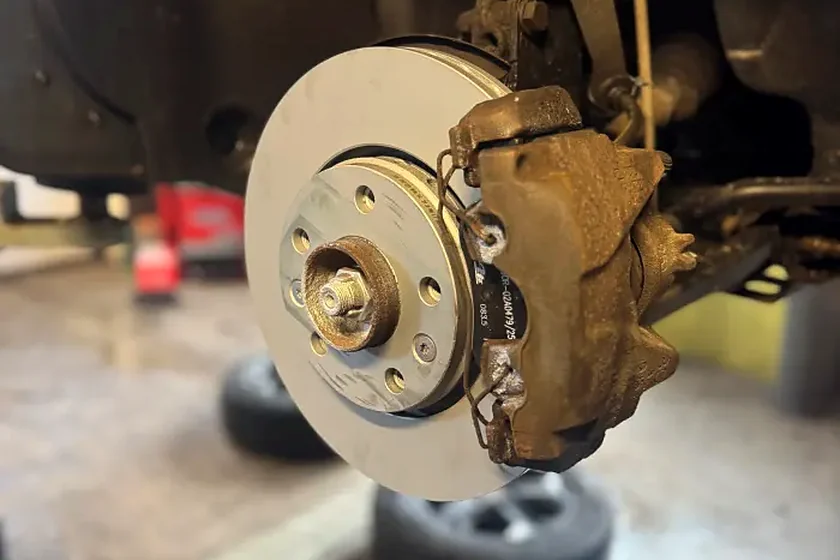
General guidance cannot confirm that your car is safe to drive. The existing workshop photo does not document the specific fault discussed here.
Find the interval for the actual vehicle
Start with the service schedule for the model, year and version of your car. Look for a documented fluid change on an invoice or in the service record; a brake-pad replacement does not establish that it happened. If you do not know the date, say so when booking a check rather than estimating it from the fluid's appearance. One interval for every vehicle would be misleading.
Why mileage alone does not answer the question
Common glycol-based brake fluids absorb moisture, which affects their boiling point. A car driven infrequently can therefore still need scheduled attention. Clear-looking fluid does not prove that its properties are correct. Any condition check needs to be interpreted alongside the manufacturer's schedule and the records; a measurement does not automatically extend a prescribed interval.
What to confirm in the replacement scope
Ask whether the quote covers labour, the correct fluid and the procedure required for the vehicle, including bleeding according to its service instructions. Electronic braking functions may require particular equipment and steps. This is not a guide to bleeding brakes at home. Ask for the work and date to be recorded so that the next service decision has a reliable starting point.
Low level or a changed pedal is a different issue
A falling level can have several explanations, including brake wear or a leak. Blindly adding fluid does not resolve the cause. A red brake warning, visible leak, abnormal sinking pedal or reduced braking requires a safe stop and assistance. Do not test braking with sudden manoeuvres on the road or assume that a fluid change alone has fixed another fault.
Choose by specification, not a similar product name
Follow the vehicle manufacturer's fluid requirements, not advice for a different car or a higher number on a container. Do not treat an unverified substitution or mixture as a safe shortcut. Mention any previous top-up with an unknown product. The appropriate response depends on the actual system and should be established by the workshop.
Requesting a clear price
There is no verified flat replacement price on this page. Send the make, model, year and last documented change if known. Distinguish planned maintenance from a warning or change in braking. Ask for labour and materials to be included and for additional repairs to require approval. The general hourly rate in the price list is not the total cost of this job.
Frequently asked questions
Is fluid always replaced with the pads?
These are separate operations. Check the invoice for what was actually done; new pads do not prove that the fluid was replaced.
Is topping up enough?
A top-up does not replace a fluid change or explain a falling level. A low level or warning needs assessment for the particular vehicle.
Agree the next step with the workshop
Autoservis 1 is at Unhošťská 92, Červený Újezd, near Unhošť, Hostivice, Kladno and Prague-West. For acute safety concerns, call rather than waiting for an email reply. An enquiry does not confirm a price, appointment or that the car can be driven.
Useful details, without unnecessary personal data
Send relevant photos or records by email; the form does not accept attachments. Remove unrelated personal information from documents. Use your phone only when safely stationary.
Send a service enquiryTechnical references and pricing
General technical sources, not a diagnosis of your car. Vehicle-specific instructions take priority.