
Published 17 October 2026. General guidance; an inspection of your vehicle is still required.
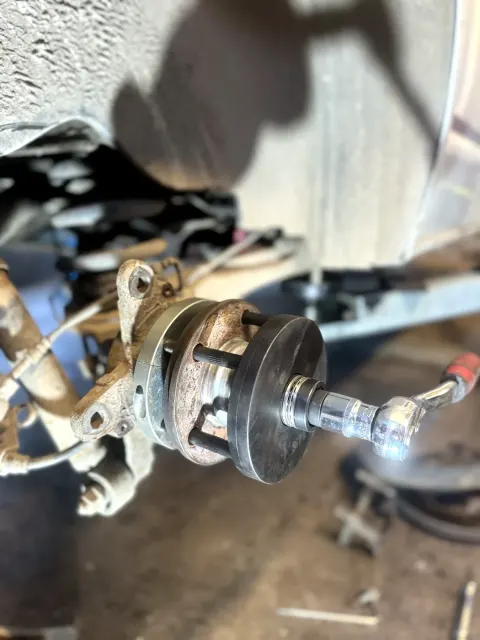
General guidance cannot confirm that your car is safe to drive. The existing workshop photo does not document the specific fault discussed here.
First decide whether it is safe to continue
Changed handling, a visibly flat or damaged tyre or rapid pressure loss calls for a safe stop and assistance. Do not drive on merely to “let the sensors learn”. Check the precise warning in the vehicle manual. If uncertain, call first; neither this guide nor an extinguished light confirms that the vehicle is safe to drive.
Which pressure is correct?
Follow the vehicle's values for the tyre size, load and checking conditions, normally from its label and manual. One internet pressure figure is not suitable for every car. Record which wheel differs and whether the pressure changes again after adjustment. If a safe check is not possible, arrange help rather than continuing without knowing the condition.
Direct and indirect TPMS work differently
A direct system receives information from sensors at the wheels. An indirect system assesses changes using wheel-rotation information. Cars displaying a TPMS symbol therefore do not all have the same potential fault or procedure after a wheel-set change. Follow the particular model's manual. A warning alone cannot establish that a sensor is missing without identifying the system.
When a reset may apply and when to investigate
Where the vehicle requires storage or initialisation, that step comes after pressures have been checked and set correctly according to its instructions. There is no universal button sequence or driving route on this page. If a warning persists, returns or changes behaviour, a leak, wheel-change procedure and possible system fault need to be separated. Clearing the message alone is insufficient.
Information to send after changing wheels
Say whether tyres were changed on the same rims or a complete wheel set was fitted, and when the warning appeared. Include its exact wording, whether it stays on or flashes and measured pressures if known. Distinguish a known system type from an assumption that a sensor is faulty. Photograph the dashboard only when safely stationary.
Confirm capability and scope before visiting
An enquiry can request tyre checks and investigation of the associated concern. Before travelling, confirm that the workshop can perform the particular procedure for your model; this guide does not promise programming, pairing or replacement of every TPMS sensor. A pressure check, leak repair and work on an electronic system are different cost items. No fixed total is quoted without establishing the cause.
Frequently asked questions
Can I just clear the light after fitting wheels?
No. Check the actual tyre condition and pressure first; any applicable reset must follow the vehicle's own instructions.
Is a TPMS warning the same as a slow puncture?
No. It is a system warning; actual pressure loss is one possible concern, but the meaning and next step need checking. A separate linked guide covers recurring leaks.
Agree the next step with the workshop
Autoservis 1 is at Unhošťská 92, Červený Újezd, near Unhošť, Hostivice, Kladno and Prague-West. For acute safety concerns, call rather than waiting for an email reply. An enquiry does not confirm a price, appointment or that the car can be driven.
Useful details, without unnecessary personal data
Send relevant photos or records by email; the form does not accept attachments. Remove unrelated personal information from documents. Use your phone only when safely stationary.
Send a service enquiryTechnical references and pricing
General technical sources, not a diagnosis of your car. Vehicle-specific instructions take priority.